



Mapping Justice

Empowering Youth Through Geospatial Innovation

Virtual summer course for high school students that merges STEM education with climate justice.

About Mapping Justice

Mapping Justice is a FREE virtual summer program for high school students in Hawaii and the Gulf Coast states.

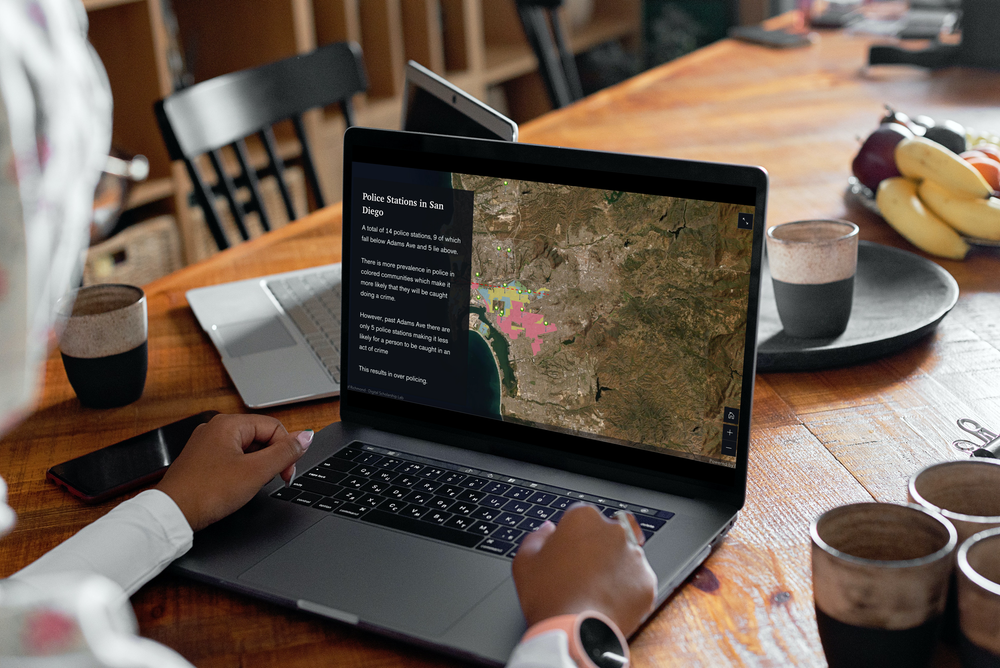
In this 6-8 week project-based course, students dive into climate and social justice issues pertaining to their communities, while learning fundamentals of Geographic Information Systems (GIS).

Students who complete the course earn college credit from accredited institutions. See our FAQ section below for more information.

Mapping Justice virtual summer program

Why Mapping Justice?

  • Student map exploring environmental data Learn about Environmental Justice and how you can make a difference in your community.
  • Student map exploring environmental data Gain marketable geospatial data science skills, including how to analyze data and create an interactive digital map.
  • Student map exploring environmental data Explore topics like climate change, pollution, water quality, coastal erosion, community resilience, and more.
  • Student map exploring environmental data Create and present a final group project on an issue you care about.
  • Student map exploring environmental data Remote and engaging classes make it easy to tune in from wherever you are, with a flexible schedule.
  • Student map exploring environmental data Earn college credit for free from accredited institutions.
  • Student map exploring environmental data Make friends with cool people from your region!

In Their Own Words: How Mapping Justice Made an Impact

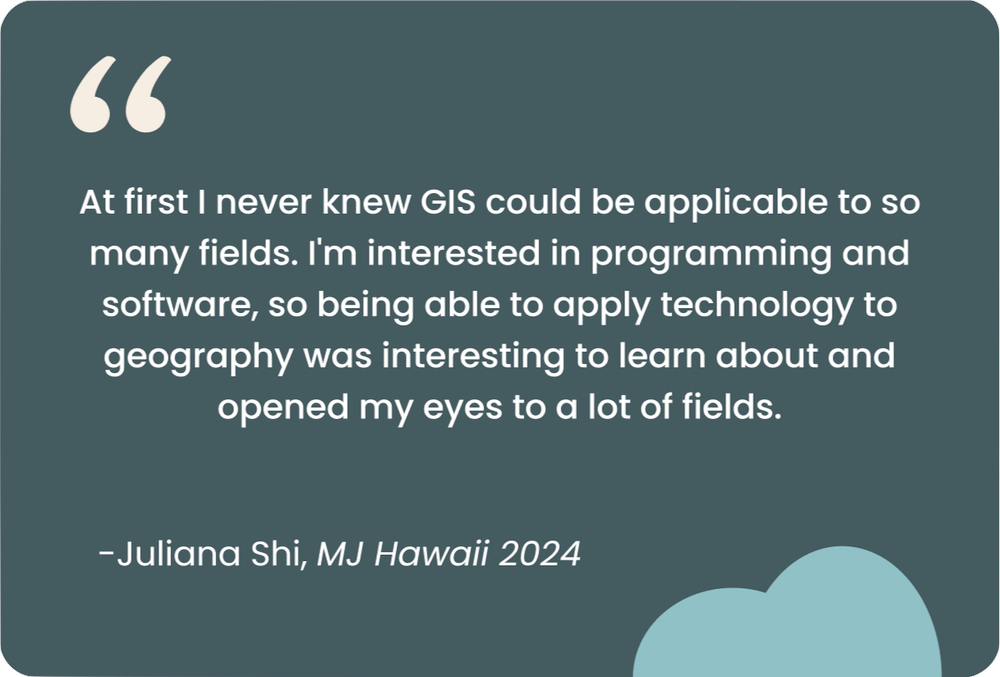
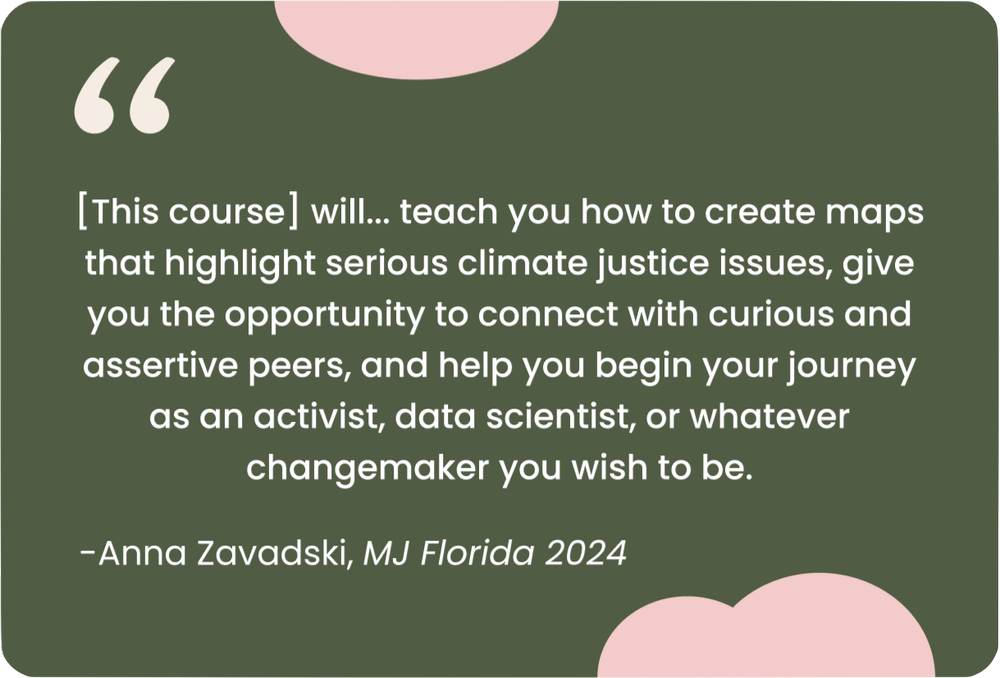
Student testimonial about Mapping Justice Student testimonial about Mapping Justice

Mapping Justice FAQs

Who is eligible?

Current high school students.

Must reside in Hawai'i or a Gulf Coast state (Alabama, Florida, Louisiana, Mississippi, Texas).

When does the program take place?

The course runs virtually for 6-8 weeks during the summer. Both programs begin in early June.

Is it all virtual?

Mapping Justice is a mostly remote program. At the end of the program, Mapping Justice culminates in a showcase where students present their final projects. For 2025, showcases will occur virtually.

What does a sample weekly schedule look like?

Students attend live classes 2-3 times a week, with self-paced assignments and group project work.

How do I receive college credit for participating?

The course is worth 3 units of transferrable credit and will have a GIS prefix. The class counts for transferable GE units offered through University of Massachusetts Global. Course description is below:

SSCU 100 Mapping Justice, Designing Geospatial Tools for Social Change: Mapping Justice teaches students how to create geospatial tools for positive community change, using Geographic Information Systems (GIS) to promote equity within their community. In the course, students focus on civic engagement and geospatial data analytics, as well as diverse GIS skills to promote community engagement. This course is only offered through the School of Extended Education. 3 credits.

Featured Projects

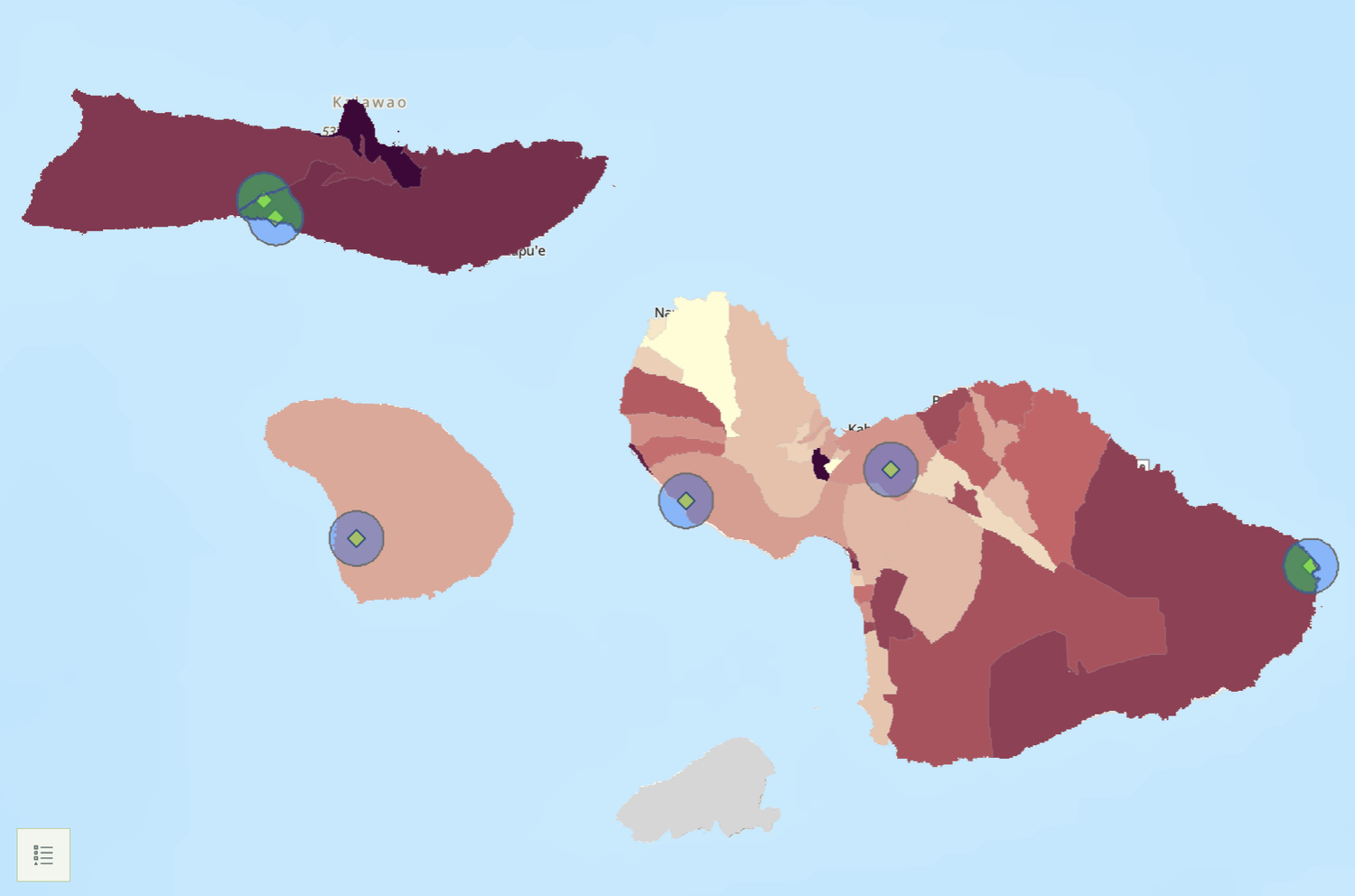
The 2023 Maui wildfires and their impact on vulnerable communities

The Economics of Environmental Health

The 2023 Maui wildfires, with a focus on the devastation in Lahaina, reveal the profound impacts of climate change on vulnerable communities. The project examines the intersection of human resilience, environmental challenges, and the urgent need for solutions.

Sei S., Sage K., Audrey M. | Mapping Justice Hawai'i 2024

Explore the Capstone
Hurricanes and their effects on the Florida population

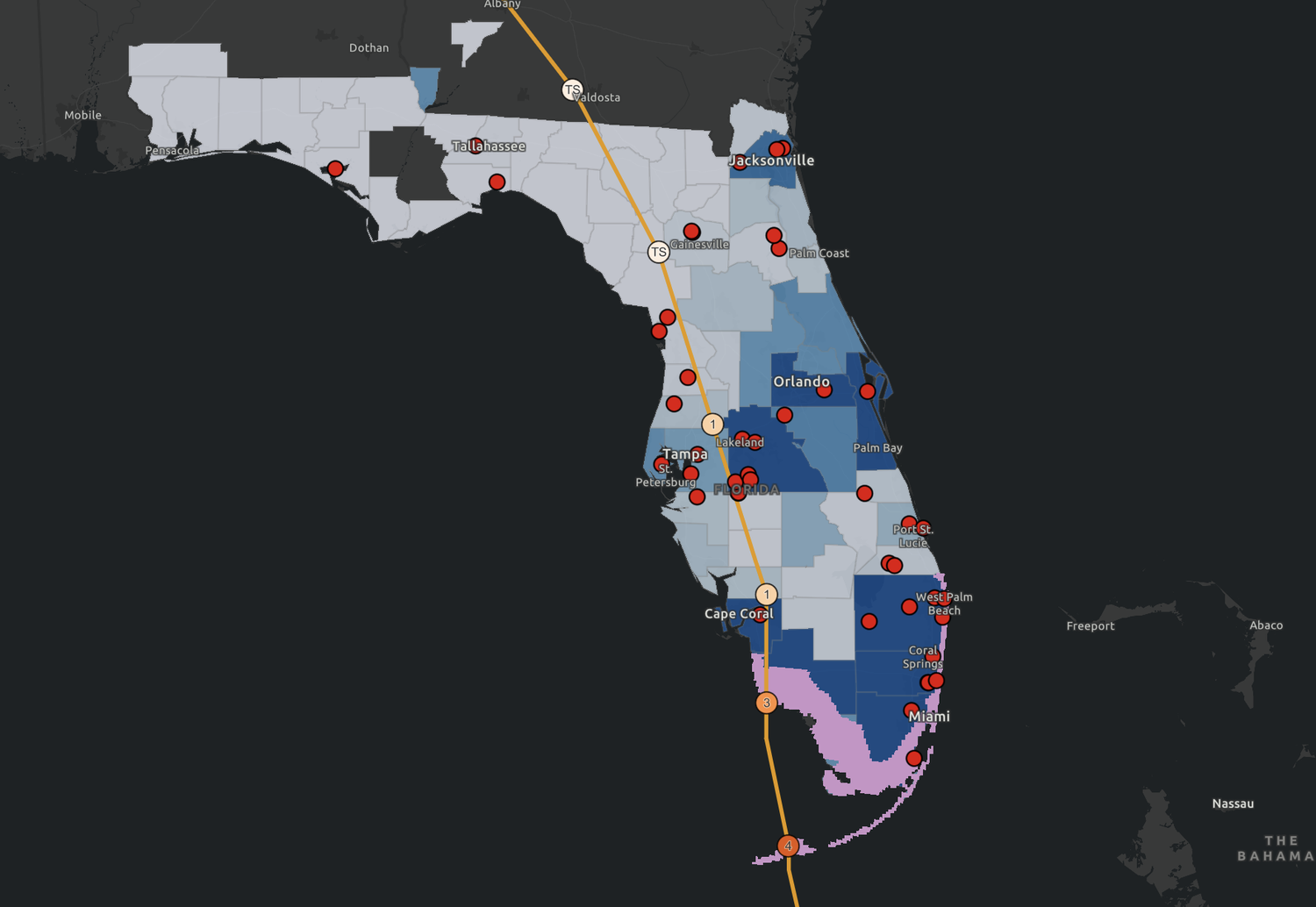
Hurricanes and Their Effects on the Florida Population

Mapping the connection between community wellbeing and tropical cyclones.

Anna Z., Dominic S., Angel W. | Mapping Justice Florida 2024

Explore the Capstone
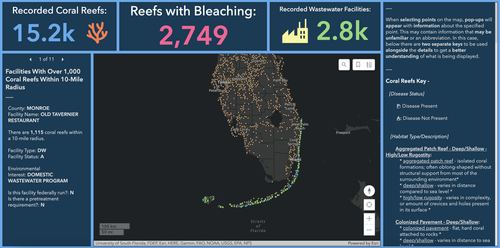
Wastewater's contribution to the coral bleaching crisis

Wastewater's Contribution to the Coral Bleaching Crisis

Coral bleaching, a critical yet often overlooked environmental issue, threatens ecosystems and coastal communities, especially in regions like Florida, as warming oceans and poor water conditions take their toll. Highlighting wastewater's role in this crisis, raising awareness, and fostering action are essential to mitigating damage and protecting both natural and human systems.

Amber I. | Mapping Justice Florida 2023

Explore the Capstone
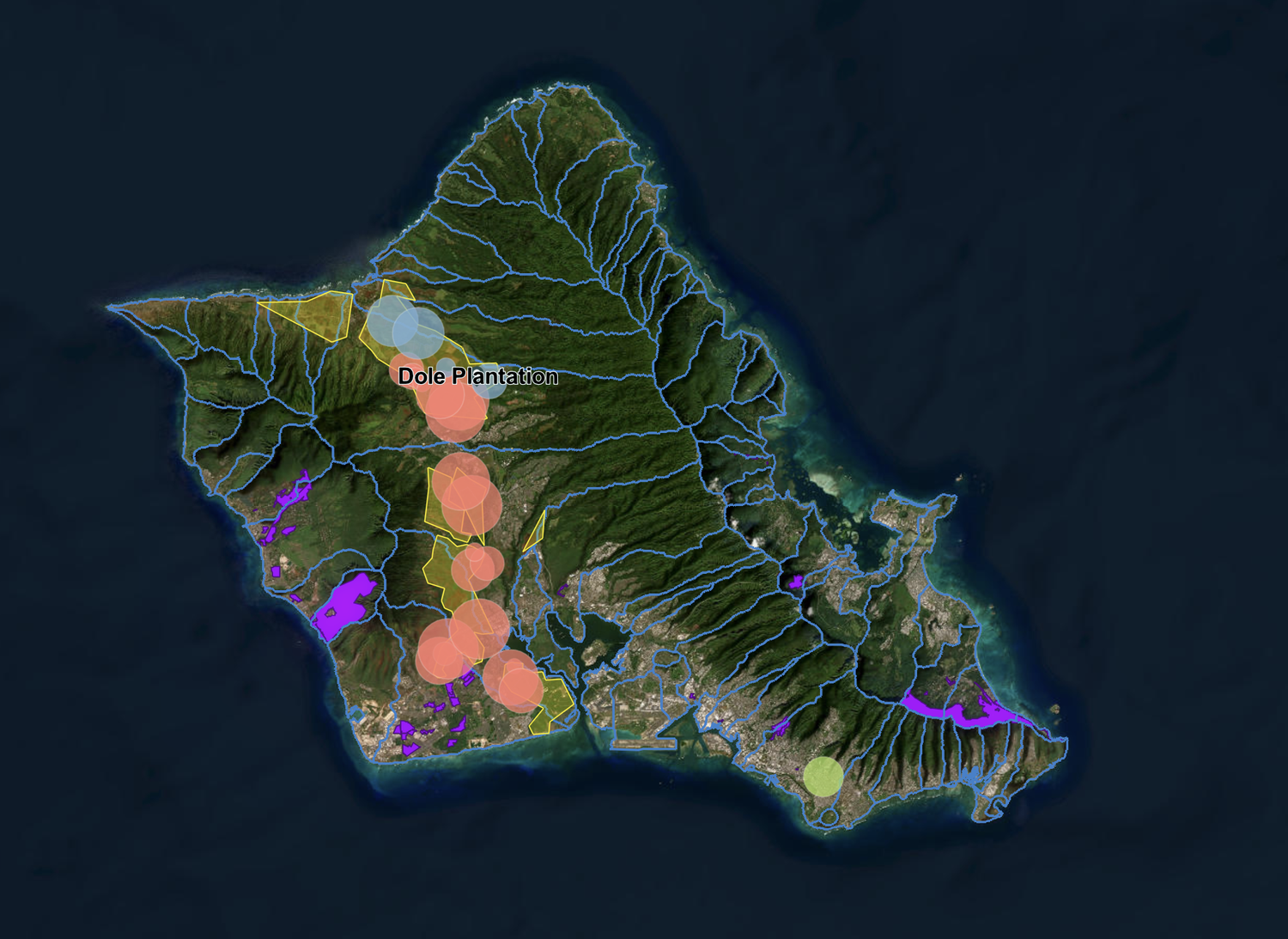
How agricultural fumigants disrupt Hawaii's watersheds

Measuring the Impact of Agricultural Fumigants in Hawaii

How Fumigants Disrupt and Contaminate Hawaii's Watersheds, Marine Life, and Local Demographics

Ailani C. and Camryn I. | Mapping Justice Hawai'i 2024

Explore the Capstone
Explore the Capstone

Want to see more? View all past projects here:

Hawaii: 2024 | 2025
Gulf Coast: 2023 | 2024 | 2025
National: 2021 | 2022 | 2023 | 2024 | 2025